


B2B Food Distributor in Bali – The culinary and hospitality industry in Bali continues to evolve at a dynamic pace. New restaurants emerge, hotels expand their services, cafés innovate their menus, and catering companies compete to deliver exceptional dining experiences. Behind this vibrant growth lies a crucial yet often overlooked component: the role of a B2B Food Distributor in Bali as the backbone of the professional food supply chain.
For many people outside the industry, a food distributor may seem like a company that simply sells ingredients in bulk. In reality, this business model is far more strategic. A distributor functions as the operational foundation that ensures thousands of businesses can maintain quality, efficiency, and reliability every single day.
This article provides a comprehensive overview of how a B2B Food Distributor in Bali operates, why its partnership system resembles mutualistic symbiosis, and why consistency, quality, and product availability are essential—especially during periods of import restrictions. Ultimately, we will highlight why Happy Farm Bali stands out as a trusted partner ready to grow alongside your business.
Understanding the Concept of a B2B Food Distributor in Bali
 A B2B (Business-to-Business) food distributor is a company that supplies food products from producers or importers to other businesses rather than directly to end consumers. In Bali, this segment serves hotels, restaurants, villas, catering services, hospitals, and cruise operations.
Within this ecosystem, the distributor acts as a strategic bridge between production sources and business operators. They manage large-scale procurement, maintain proper storage facilities that comply with food safety standards, and ensure timely distribution.
Unlike retail stores, a Best B2B Food Distributor in Bali focuses on volume efficiency, supply stability, and long-term contractual relationships. Transactions are not merely spot purchases; they represent ongoing collaborations built upon agreed service standards and product specifications. This is where the importance of a strong and mutually beneficial partnership system becomes evident.
Partnership System: A Mutualistic Symbiosis in the Supply Chain
The relationship between a distributor and its business partners is not one-sided. It operates much like mutualistic symbiosis in nature. Distributors depend on the growth of their partners to expand their own operations, while partners rely on distributors to sustain daily business continuity.
When a restaurant expands or opens new branches, purchasing volume increases. As a result, the distributor’s business grows. Conversely, when a distributor provides competitive pricing and stable supply, partners can innovate menus, enhance service quality, and capture larger market share.
This relationship is built on trust, transparency, and long-term commitment. In the context of a B2B Food Distributor in Bali, such collaboration is even more critical, as Bali is an international tourism destination that demands global standards. Therefore, partnership in this industry is not simply contractual—it is strategic collaboration.
The Importance of Consistency in Food Distribution
Consistency forms the foundation of professional food distribution. Restaurants cannot afford fluctuating ingredient quality that alters the taste of their dishes. Hotels cannot serve premium menus with inconsistent standards.
A reliable B2B Food Distributor in Bali understands that consistency includes:
- Uniform product quality standards
- On-time delivery performance
- Stable and transparent pricing
- Efficient ordering systems
Without consistency, business partners struggle to protect their brand reputation. In the hospitality sector, reputation is a valuable asset. A single negative customer experience can spread rapidly through online reviews and digital platforms. For this reason, distributors that maintain operational consistency become irreplaceable long-term partners.
Product Quality as the Pillar of Trust
Beyond consistency, product quality is a decisive factor when selecting a B2B Food Distributor in Bali. Meat, seafood, frozen products, and processed goods must meet strict food safety and premium quality standards.
Quality encompasses more than taste. It involves:
- Temperature-controlled storage systems
- Reliable cold chain logistics
- Legal compliance and certifications
- Hygienic handling procedures
When distributors safeguard quality from warehouse to delivery point, business partners can focus on culinary execution and customer service. This operational efficiency generates added value for both parties. However, the greatest challenges often arise during periods of import restrictions.
Import Restrictions and Supply Stability Challenges
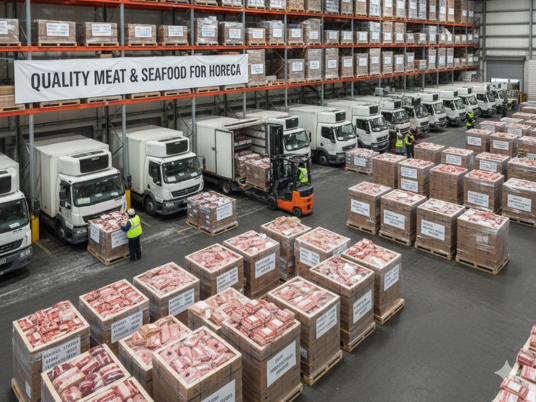 At certain times, governments impose import restrictions on meat and other food products to protect domestic industries and stabilize the national economy. Such policies inevitably affect supply chains, particularly for imported beef and processed goods.
For culinary businesses, this situation raises legitimate concerns:
Will stock remain secure?
Will prices increase sharply?
Will product quality be maintained?
This is precisely where a well-managed B2B Food Distributor in Bali plays a critical role. Distributors with robust supplier networks and disciplined inventory planning can maintain product availability even amid market volatility.
Happy Farm Bali understands that supply stability is not merely a logistical matter; it represents business security for partners. When the country limits imported meat supplies, Happy Farm’s product stock remains secure and comprehensive due to structured inventory planning and resilient sourcing strategies. Such stability distinguishes professional distributors from ordinary suppliers.
Product Availability: A Determining Factor in Operational Continuity
In the culinary business, ingredient availability is everything. If one key ingredient is unavailable, a signature dish cannot be served. When a flagship menu item is missing, customers may turn to competitors.
A dependable B2B Food Distributor in Bali ensures:
- Products remain available according to contractual needs
- Alternative options are prepared when supply disruptions occur
- Ordering systems are responsive and adaptable
Availability is not solely about quantity; it is also about timing. Late deliveries can disrupt kitchen preparation, large-scale events, or catering services. With structured management systems, professional distributors become integral to the smooth daily operations of their partners.
Distributor Growth and Partner Growth: A Positive Linear Relationship
From a business perspective, distributor growth is directly proportional to partner growth. When partners expand, purchasing volume increases, product variety broadens, and distribution scale grows accordingly.
Conversely, a growing distributor can:
- Offer a wider product portfolio
- Provide more competitive pricing through economies of scale
- Invest in advanced storage and logistics technology
- Improve customer service systems
This relationship creates a healthy cycle of shared growth. Distributors do not merely sell products; they provide the infrastructure that supports long-term business expansion.
In Bali—an internationally recognized tourism destination—having a distributor capable of scaling alongside partners is essential. Shifting tourism trends, rising service standards, and increasing global expectations require logistical readiness and operational excellence.
Happy Farm Bali: The Best B2B Food Distributor in Bali
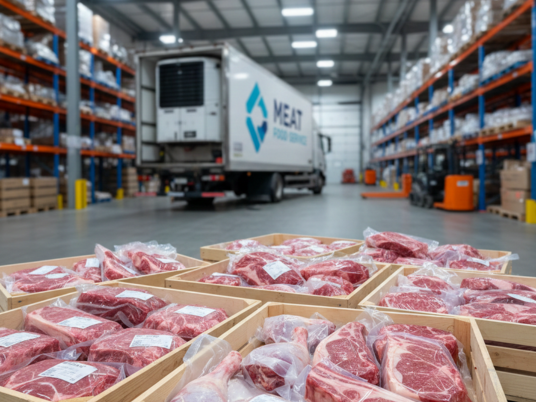 Within this competitive landscape, Happy Farm Bali stands out as a trusted solution for businesses seeking a dependable B2B Food Distributor in Bali committed to consistency, quality, and product availability.
With structured inventory management, an extensive supplier network, and a strong commitment to quality control, Happy Farm Bali serves as a strategic partner for diverse business segments—from independent restaurants to large hotel chains.
More than a distributor, Happy Farm Bali cultivates long-term partnerships grounded in trust. The philosophy is straightforward: when partners grow, Happy Farm grows. When the distributor advances, partners benefit from enhanced services and operational support. This approach positions Happy Farm Bali not only as a product supplier but also as a foundational pillar supporting the growth of Bali’s culinary and hospitality industries.
Conclusion
A B2B Food Distributor in Bali plays a vital role in sustaining the stability of the culinary and hospitality sectors. Through a partnership model rooted in mutualistic symbiosis, distributors and business partners support one another in achieving sustainable growth. Consistency, quality, and product availability serve as the three core pillars in maintaining trust and operational continuity—especially amid import restrictions and supply chain challenges.
In this context, Happy Farm Bali proves itself as the best B2B Food Distributor in Bali, ready to grow with you. Backed by strong inventory management, assured quality standards, and long-term commitment, Happy Farm Bali represents a strategic partner for businesses seeking stability, professionalism, and competitive advantage. If you are looking for a reliable distribution foundation to support your business expansion in Bali, Happy Farm Bali is the partner prepared to move forward and grow together with you.